Techniques
Explore quick, practical techniques you can use during class to generate ideas, analyse problems, structure discussions, support reflection and make learning more active.
Students analyse alternative scenarios by asking “what if…” questions that change the key assumptions of a situation. This helps them explore different possible outcomes, identify risks and consider the consequences of decisions. The technique encourages students to move beyond the most obvious solution and look at the problem from a broader perspective. It develops scenario thinking, anticipation skills and reflection on their own assumptions.
Creating extreme, unrealistic or even absurd scenarios breaks the basic rules of how a product, service or market works. Students begin with the question what if…, e.g. the customer did not pay for the service, the product had no functions, or the company operated without employees. They then analyse which elements of these scenarios could be partially applied or adapted. In this way, students learn that even unrealistic ideas can lead to concrete innovations if they are properly interpreted and understood. The most common mistake is stopping at the level of playing with ideas without attempting to apply them.
This technique helps reveal the unquestioned beliefs on which students base their thinking about a problem. Instead of developing ideas straight away, students first identify key assumptions, e.g. about the customer, the market or how a service works. They then reverse these assumptions and analyse the consequences. The value of this activity emerges when students move from a reversed assumption to a specific decision or idea. They consider the conditions under which such a change might make sense and what would need to change in the project. The most common mistake is treating reversed assumptions as a purely theoretical exercise without translating them into solutions.
Students ask AI to generate multiple ideas on a given topic and deliberately refrain from judging their quality or relevance for a set period of time. To encourage variety, they ask for several versions of the list from different perspectives, such as a realistic version, an exaggerated version, or a competitive-advantage version, and then combine the responses into a single cloud of inspiration. Only in the second step do they select the three most promising ideas from the full pool and justify their choice in two or three sentences, explaining what makes them valuable and how they could be improved. This technique teaches students that creativity begins with abundance, helps them overcome the fear of the blank page, and shows that AI can accelerate idea generation, while humans give ideas meaning and direction.
Students begin or end the activity with a short round in which everyone responds to one question related to teamwork. At the beginning, this may involve sharing expectations, concerns, or how they are approaching the task. At the end, it may involve reflecting on the collaboration process, decisions made, or their own contribution.
This technique creates a moment to pause and notice what is happening in the group before moving on. It introduces awareness and reflection, which are often overlooked in dynamic teamwork. Its value lies in making it normal to talk about the experience of working in a team. As a result, students become more aware of their reactions, roles, and ways of functioning within the group.
Avoid treating this technique as a purely formal add-on. If the questions are too general or repetitive, students may give predictable answers. It becomes meaningful when the question is specific and connected to the current situation.
Students work in two circles: an inner circle and an outer circle. Students in the inner circle discuss a given topic, present their views, and respond to one another’s arguments. Students in the outer circle observe the discussion, focusing not only on what is said, but also on communication style, group dynamics, and moments of tension. After a set time, the roles are switched so that everyone has the opportunity to both take part in the discussion and observe it. This technique develops active listening, argument-building, and more conscious participation in discussion.
Students identify their skills, experience, or areas of confidence and present them in the form of a simple map or matrix. This may be a team competence overview or a visualisation of confidence levels in a specific area. The aim is to help students recognise the diversity within the team and the resources available to them. They begin to see other people’s competences as complementing their own, which can influence how they collaborate and make decisions.
This technique supports more conscious team-building and a better division of roles. Its value lies in showing that effective teamwork depends not only on individual skills, but also on how those skills are combined. Avoid reducing it to a simple list of skills with no further purpose. The map should serve as a starting point for concrete decisions in team-based work.
Section 1. Notes is the widest column, placed on the right-hand side, approximately 15–20 cm wide. This space is used to record the most important information, such as facts from a lecture,
notes from a book, or observations. Students may use abbreviations, bullet points, and drawings.
Section 2. Cues is the narrower column on the left-hand side, approximately 5–8 cm wide. This space is used to write down key words, questions, and comments that arise while taking notes.
Section 3. Summary is the area below the two columns. It is used to write one or two sentences summarising the information and capturing what the student has just learned.
Students work through a crisis situation involving time pressure, incomplete information and decision-making under uncertainty. As the exercise unfolds, new data or changes in the situation are introduced, requiring students to adapt quickly.
Focus not only on the solutions students propose, but also on how they make decisions and respond to changing conditions. This technique develops resilience in uncertainty, decision-making skills and teamwork under pressure.
The teacher presents a problem, decision, or proposed solution and then assigns one student or group the role of devil’s advocate. Their task is to deliberately challenge the arguments, identify weaknesses, and explore alternative interpretations, even if they do not personally agree with them. The remaining students defend their positions, refine their arguments, and respond to counterarguments.
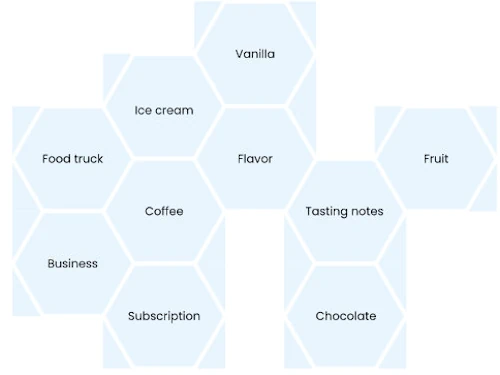
It involves working with hexagonal cards containing concepts, facts, phenomena, or arguments. Students arrange the hexagons on a table or board so that their edges connect, creating logical relationships between the elements. Each connection must be clearly justified, making the group’s reasoning process visible.
Educational playlists organise teaching materials into a structured sequence, similar to a music playlist. Students receive a set of materials, such as articles, recordings, examples or data, which guide them step by step through the topic. The teacher can prepare several playlists at different levels of difficulty or from different perspectives.
Educational sprints are short, intensive periods of work (e.g. 15–30 minutes) focused on solving a problem or completing a specific task. Students work individually or in small teams, and after the sprint they briefly present their results or conclusions. This structure increases focus and encourages the rapid testing of ideas.
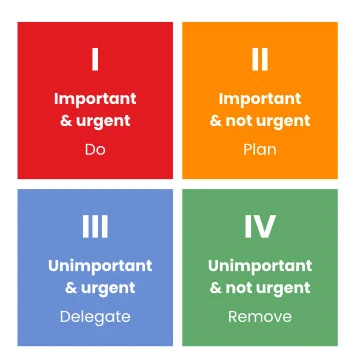
The Eisenhower Matrix is a technique for organising tasks according to two criteria: urgency and importance. Students work with real tasks, projects, or academic responsibilities, assigning them to one of the four quadrants of the matrix (do, schedule, delegate, and eliminate).
It helps students quickly identify which tasks require immediate action, which should be planned, which can be delegated or simplified, and which are merely distractions. As a way of analysing decisions and priorities, it develops conscious planning skills and teaches students to distinguish between what is urgent and what is genuinely important.
The teacher presents incorrect analyses of a problem. The errors may relate to procedures, concepts, or factual misunderstandings, for example two or three flawed solutions containing common thinking traps. Students work in groups to identify and classify the errors, explain what should be corrected, and propose improved solutions.
The activity concludes with a group discussion on strategies for avoiding similar errors in the future. This technique helps students recognise mistakes, analyse evidence, and develop strategic thinking, while fostering a learning culture in which errors are treated as opportunities for reflection and growth.
Present students with a short AI-generated text or chart containing subtle errors, logical gaps, outdated data, ethical bias, or inaccurate interpretation. Students identify, correct, and justify each error. In a finance class, for example, the text might use the term EBITDA incorrectly or confuse net margin with gross margin. Students correct the errors using reliable sources. The task helps develop accuracy, critical thinking, and a deeper understanding of key concepts.
A quick critical-thinking exercise in which students ask AI to explain or summarise a given topic, then check each statement against real data, such as Eurostat, OECD, or company reports. Students classify the facts as accurate (green), incomplete (yellow), or misleading (red). This simple exercise helps them become more sceptical readers and strengthens their ability to work with data.
Feedforward helps students move from evaluating completed work to planning a concrete next step. It can be used individually, in pairs or in small groups. After completing a task, students identify what they worked on and which aspect they want to improve next, such as
the structure of their response, quality of argumentation, analytical approach, team communication or work organisation. They then formulate a specific action for the next task: what they will start with, organise or limit, which criterion they will apply, or which decision they will make earlier. In pair work, the other person helps refine this step by asking questions and suggesting possible improvements. Feedforward is therefore less about judging past performance and more about using experience to improve future work. At the end, each student records one development decision to apply in their next activity.
The Five Whys is a technique that involves asking why repeatedly until students identify the root cause of a problem. Participants begin with a precise description of a specific event, such as a delivery failing to reach a client on time. They then move through successive rounds of questioning, referring only to facts and figures at each stage. Five rounds are usually sufficient, although the number is not fixed. The questions should be repeated until assumptions and guesswork are replaced by evidence-based explanations.
The teacher poses a question that requires students to take a position, for example: agree, disagree, partly agree, or difficult to say. Each corner of the room is assigned a different response. Students first make an individual decision and then move to the corner that represents their view. In groups, they justify their choices and listen to the arguments of others. This is followed by a discussion between the groups or with the whole class. After hearing counterarguments, students may decide to change their position.
The futures wheel technique involves analysing the consequences of a selected event, trend, or decision by gradually expanding a network of connections. A starting point, such as introducing AI into education, is placed at the centre. Students then identify direct, first-order consequences, followed by second-order and further consequences radiating outward. Each successive layer reveals how a single phenomenon can lead to multiple interconnected effects, often in unexpected ways. Interpretation and evaluation are central to the activity, making the technique particularly effective for analysing change, innovation, and strategic decisions. The futures wheel develops cause-and-effect thinking, helps students anticipate the consequences of actions, and encourages them to view problems within a broader context.
A glossary of key terms is a learning technique that involves recording and explaining important terms encountered during study. Students define concepts in their own words and supplement the definitions with examples, associations, or simple visualisations. This method helps students understand new terminology, use specialist language more confidently, and supports memorisation and independent learning.
This technique involves combining seemingly distant fields in order to generate new concepts. Students use AI to create proposals based on the juxtaposition of two areas, then select one and develop it into a coherent, concise concept. The process requires quick analysis, selection, and refinement. As a result, it develops associative thinking, the ability to work at the intersection of different perspectives, and the skill of presenting ideas succinctly, all of which are important in innovation design.
Students explore a single issue in depth, analysing it from different perspectives, sources, and contexts. They focus on understanding the mechanisms, relationships, and practical applications associated with the problem. The work may include case analysis, comparison of approaches, identification of limitations, and the formulation of students’ own conclusions. This technique develops analytical thinking, the ability to synthesise information, and the skills needed to work with complex issues.
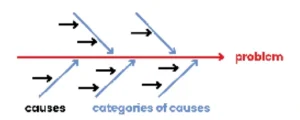
An Ishikawa diagram is a visual technique for organising the causes of a problem by grouping them into logical categories. During the activity, students work in groups and begin by defining the problem, which is placed at the end of the diagram. They then identify possible
causes and organise them into broad categories, such as people, processes, procedures, or the environment. Within each category, students add specific events, decisions, or errors, while avoiding premature judgement or rushed conclusions. The Ishikawa diagram is best suited to a longer teaching block, as it can be time-consuming and challenging to apply to complex problems.
Knowledge capsules are small, self-contained learning units that combine a short explanation, source material, such as a text, video or example, and a task to check students’ understanding of the topic. Each capsule focuses on a single issue, allowing students to build their knowledge gradually. Dividing the material into small parts makes more complex topics easier to understand.
Students divide a sheet of paper into three columns titled: What I Know (Know), What I Want to Know (Want to Know), and What I Learned (Learned).
In the first column, students write down what they already know about the topic. In the second column, they formulate questions and identify areas that require clarification, which helps guide the learning process. After completing the activity, students fill in the third column by recording the new information they have learned and checking whether they can answer the questions they posed earlier.
Learning menus give students the opportunity to choose from several tasks that lead to the same learning objective. For example, students may prepare a short analysis, create a visual explanation or record a short presentation. This allows them to adapt their way of working to their interests and needs.
Lotus Blossom is a structured form of brainstorming that helps organise the creative process of developing ideas using a 3×3 grid. The central square contains the chosen topic or challenge, while participants fill the remaining eight squares with ideas, associations or possible solutions. In later stages, students can expand the topic further by creating additional grids around the ideas produced in the first round. In this way, the lotus blossom gradually develops into a conceptual structure for the topic, while also supporting students’ creative thinking and deeper analysis. Sticky notes work particularly well for this activity, as they can easily be moved and rearranged.
A mood board helps reveal how students understand a problem, user or direction for a solution. Students create it as a visual response to a specific question, e.g. what experience the user should have or how the service should be perceived, and each element must be linked to a decision. The value of this activity lies in justifying choices, so students explain what individual elements mean and what decisions follow from them. Simple tools such as PowerPoint or Google Slides can be used, as well as collaborative tools such as Miro or Padlet, inspiration platforms such as Pinterest, Canva or AI tools.
Nowa technikaNowa technikaNowa technikaNowa technikaNowa technikaNowa technikaNowa technikaNowa technikaNowa technikaNowa technikaNowa technikaNowa technikaNowa technika
Students write a short response to one or two questions summarising the class. These usually focus on the most important thing they have learned and an aspect that remains unclear or requires further explanation. The response is concise and focuses on what students genuinely understand at the end of the activity.
The note is written individually, without lengthy preparation, usually within one minute. The teacher may collect the responses or use them as a starting point for a brief discussion.
This allows the teacher to quickly assess students’ level of understanding and identify gaps that may need to be addressed in subsequent classes.
Pareto analysis is a problem-analysis technique based on the 80/20 principle, which suggests that a small number of causes often account for most outcomes. Working in groups, students first collect data, such as sources of errors, quality issues, or barriers within a project. They then rank these factors in descending order according to their frequency or impact. Students present their findings in a bar chart with a cumulative line, making it easier to identify the key areas that require attention.
The technique strengthens analytical thinking, supports effective information selection, and teaches students how to prioritise actions. It is particularly valuable for students in business, engineering, and medical fields who work with large datasets, analyse processes, or learn to make decisions in complex systems.
Students work in pairs, asking one another questions that support reflection and decision- making. The partner’s role is to help structure thinking and offer new perspectives. This technique develops self-reflection, responsibility and the ability to learn from others.
Students receive a set of paper or digital cards called Prompt Cards, each introducing a specific variation to working with AI, for example: explain this to a 10-year-old, or add a sustainability perspective, or compare it with another country. Students run the same prompt several times, modifying it each time according to the instruction on a randomly selected card. They then compare the results and discuss what has changed, such as the language, assumptions, examples, conclusions, and, in some cases, hidden simplifications or biases. This activity helps students practise conscious prompt design and develop the ability to recognise misleading or distorted information.
Students work in teams to solve a selected problem, but instead of developing solutions directly, they begin by reversing the perspective. Their task is to produce as many ideas as possible for how to worsen the situation, increase the scale of the problem or create an undesirable outcome.
The activity takes place in three stages. First, the teacher defines the topic or challenge by framing it in reverse. Next, students share ideas, discuss them and build on one another’s thinking, with no idea criticised or rejected. Finally, the collected ideas are analysed in terms of their consequences and transformed into concrete solutions and recommendations for action.
Students receive short role descriptions that define a particular perspective, interest, goal, or constraint. Their task is to adopt the assigned role and make decisions from that point of view during a discussion or problem-solving activity. The roles help structure the interaction.
They introduce variety and often create tension between different positions, encouraging students to argue, negotiate, and justify their choices. This helps students move beyond their own assumptions and view the problem from another perspective. It also develops empathy and shows how team decisions are shaped by different interests.
Avoid roles that are too broad or unclear, as students may find them difficult to engage with. Each role should have a clear goal and a meaningful influence on the activity.
Students work on a single task, but change roles during the exercise, taking on different perspectives within the team or process. Each role involves different goals, constraints and responsibilities, helping students see how their decisions affect others. Through rotation,
students gain a better understanding of the relationships between roles and learn to think and collaborate more flexibly. This technique develops cognitive empathy, systems thinking and the ability to view a problem from different perspectives.
Root Cause Analysis is a problem-analysis technique that focuses on identifying one or more key systemic causes. Working in teams, students reconstruct the sequence of events step by step, identify critical points, and determine where the process broke down. The technique strengthens analytical and process-oriented thinking, as well as the ability to formulate
conclusions that lead to corrective action.
It involves seeking an innovative solution to a problem based on ideas collected earlier. Students’ attention should focus on transforming the proposed solution through various modifications, the initials of which form the name of the technique:
S – Substitute
C – Combine
A – Adapt
M – Modify
P – Put to another use
E – Eliminate
R – Reverse
These successive modifications teach students to view a solution, service or product from different perspectives, while also helping them recognise the needs of diverse stakeholders.
Short videos (2–5 minutes) that introduce a single concept, problem or example. Instead of a long lecture, students receive a small amount of knowledge that they can immediately apply in a task or discussion. After watching the video, they complete a short activity, such as answering a question, solving a mini-problem or identifying a practical application of the concept presented. This format helps maintain attention and reduces cognitive overload.
To help students experience the full value of this activity, bring six hats in different colours to class, or mark six chairs with the appropriate colours. Make sure each participant has the opportunity to take on several roles.
Each colour represents a different perspective:
- White represents a logical approach based on numbers and data.
- Red allows students to discuss emotions, subjective impressions and personal intuition.
- Black symbolises a critical approach focused on identifying errors and weaknesses.
- Yellow, by contrast, represents optimism, enthusiasm and the ability to recognise benefits.
- Green stands for creativity and the search for innovation.
- Blue represents organising and summarising all the previous perspectives.
Through de Bono’s method, students experience a creative yet well-grounded process of generating solutions.
Sketchnotes are visual, non-linear notes created using key words, symbols such as shapes, colours and icons, and a carefully planned spatial structure. The process involves selecting and recording the most important information in a concise form, using key words. These
can be supported by simple symbols, icons, and diagrams that help students understand the content. Arrows, lines, and frames help show cause-and-effect links and relationships between information and ideas. Elements are arranged across the page or screen, supporting
the development of an overall understanding of the topic. The most important content can be highlighted with colour. Drawing skills are not important; what matters is that students create the notes themselves.
A small group of students sits in a circle and discusses a previously read source text. The teacher acts as a facilitator and poses an open-ended question, such as: What themes dominate the text? Participants discuss freely without raising their hands, asking follow-up questions, paraphrasing, and building on one another’s contributions.
Outside the circle, observers take notes, after which the roles are reversed. At the end, the group reflects on the entire process. The method develops active listening, the ability to question assumptions, and the skills needed for constructive dialogue.
The teacher prepares a set of different sources related to the same topic, such as an academic article, industry report, blog post, statistical data, or marketing material. Students analyse the sources and rank them from the most to the least reliable or useful, using criteria such as authorship, methodology, currency, purpose of publication, and how easily the information can be checked. They then compare their rankings in groups, justify their decisions, and discuss differences in evaluation.
SWOT analysis is a classic technique used in strategic thinking. It helps students examine four areas at the same time: strengths, weaknesses, opportunities, and threats. In class, students apply it to a specific object of analysis, such as a project, research idea, organisation, or personal development plan. A key part of the task is distinguishing internal factors from external ones and ensuring that conclusions are based on evidence. The technique teaches students to synthesise information, recognise tensions between potential and limitations, and formulate realistic strategic conclusions. It also shows that decisions are always made within a specific context.
Students list all ideas or factors related to the problem being analysed, such as possible causes of a phenomenon, solutions, or elements influencing a given situation. They then select the ten most important items and rank them from 1, the most important, to 10, the least important. Finally, they justify their ranking with appropriate arguments.
The trend radar technique involves identifying, organising, and evaluating trends that may influence a selected phenomenon, organisation, or market. Trends are placed on a circular radar, usually according to their level of impact, maturity, or time horizon, such as short-, medium-, or long-term. Students analyse which trends are most significant, which are just
emerging, and which are losing relevance. They then interpret their potential impact and consider the possible consequences for the area under analysis.